How sessions actually
work in practice.
The session structure is deliberate. Every element exists for a reason. Here's what happens inside a Tugucu Hipulu cohort session from beginning to end.
Situated learning. The idea that context is everything.
Learning that happens in the context where it will be used tends to transfer more reliably than learning that happens in an abstract setting and then must be applied later. This insight shapes every structural decision we make.
When a participant brings a situation from their current week, they're not applying a lesson to a context. They're learning inside the context itself. The coach and peers help them see it more clearly, think through it more carefully, and develop a more considered response than they would have reached alone.
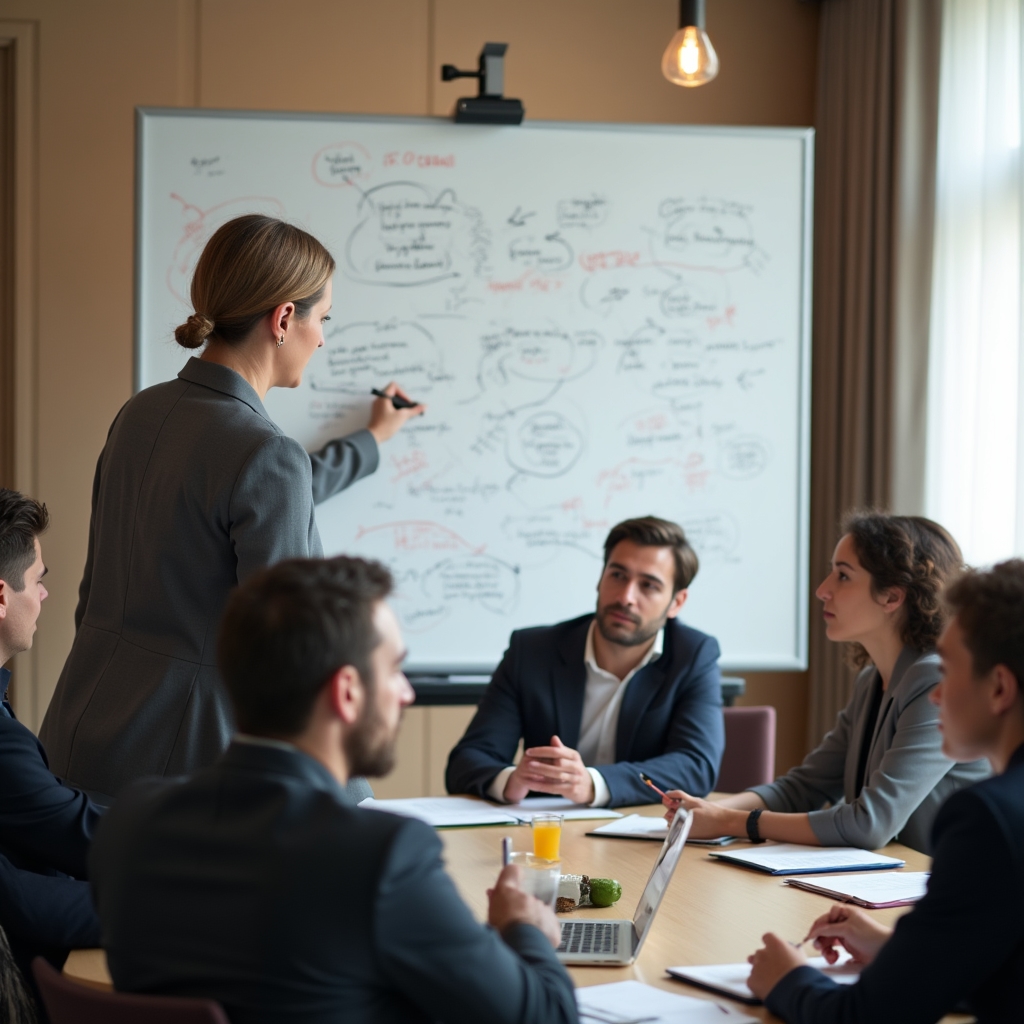
A 90-minute session, step by step.
Opening Check-In 10 minutes
Each participant briefly names what's on their mind from the past week. Not a full situation, just a headline. This surfaces what's alive in the room and helps the group and coach understand where energy is sitting before deciding what to work on.
Situation Selection 10 minutes
The group and coach together decide which one or two situations to work on in depth. Sometimes a theme emerges across multiple check-ins and the group works on that shared territory. The selection process itself is part of the learning.
Deep Work 55 minutes
The participant presenting their situation shares the full context. The group asks questions to understand it more clearly. The coach facilitates, drawing out perspectives, challenging assumptions, and helping the participant and group arrive at insight they wouldn't have reached on their own. This is the core of the session.
Synthesis and Commitment 15 minutes
The participant names what shifted in their thinking and what they'll do differently as a result. The group reflects briefly on what they each took from the conversation. Specific commitments are named and noted, which the group returns to in future sessions.

Not a teacher. Not a consultant. A skilled guide.
The facilitator's job is not to deliver answers or tell participants what to do. It's to create conditions where the participant and their peers can think more clearly together than they would alone.
This means asking questions that open up the situation rather than narrow it down too quickly. It means noticing when the group is avoiding something important and gently surfacing it. It means knowing when to let a productive silence sit and when to intervene with a reframe.
It also means holding the structure. Without skilled facilitation, peer learning can drift into venting or advice-giving that doesn't actually help. The facilitator ensures the conversation stays productive and moves toward insight and action.
The learning doesn't stop when the session ends.
Session Notes
A written summary of key insights, questions raised, and commitments made. Useful for reflection and for sharing with a mentor or manager if appropriate.
Reflection Prompts
Short prompts designed to help participants process what came up in the session and connect it to their ongoing experience as a manager.
Peer Channel
A shared space where cohort members can check in with each other between sessions. Often where the most spontaneous and useful conversations happen.
What changes across the arc of the program.
Early Sessions
Participants are still getting comfortable with the format and with each other. Situations tend to be presented with a lot of detail and uncertainty. The group is learning how to ask good questions.
Mid-Program
Trust has built. Participants bring situations they'd been hesitant to share earlier. The group's questions get sharper. People start naming patterns they notice across situations. Commitments from earlier sessions come back for review.
Later Sessions
Participants often describe a shift in how they're thinking about their role, not just their tactics. The situations they bring are more complex. They're asking different kinds of questions about themselves as managers.
After the Program
The peer relationships built during the cohort often continue informally. Participants leave with a clearer sense of their own management approach and a set of tools for working through leadership challenges as they continue to arise.
The method is best understood by experiencing it.
Reach out to learn more about how sessions work and to ask any questions about the program structure before deciding whether to apply.
Contact Us